
This is the companion code for the Master Thesis entitled "". The master thesis is done in Bosch Center of AI research, and licenced by GNU AFFERO GENERAL PUBLIC LICENSE. The code allows the users to apply constrained for one type of error, such as false negative rate to do safe classification using gradient boosting. Besides, one can reproduce the results in the paper as it is provided in the examples.
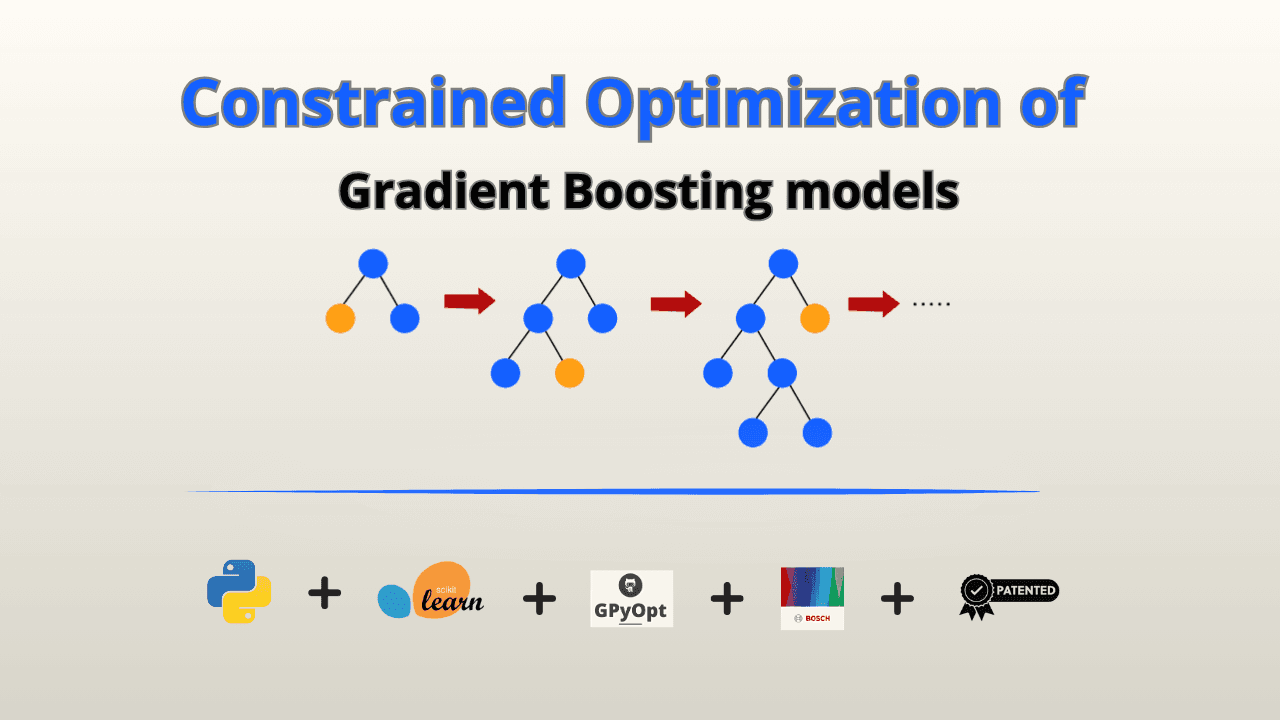
This is the companion code for the Master Thesis entitled "". The master thesis is done in Bosch Center of AI research, and licenced by GNU AFFERO GENERAL PUBLIC LICENSE. The code allows the users to apply constrained for one type of error, such as false negative rate to do safe classification using gradient boosting. Besides, one can reproduce the results in the paper as it is provided in the examples.
This library enables user to define their own constraints and apply them on for the gradient boosting. To see how to do this visit here.
This project language is Python and it is built on top of scikit-learn gradient boosting. For hyper-parameter optimization GPyOpt bayesian optimization is used.
This is an example of how you may give instructions on setting up your project locally. To get a local copy up and running follow these simple example steps.
To use the constrained_gb library, you need to have scikit-learn>=0.22.0 installed, which is probably installed if you are using Machine Learning algorithm in Python. To do hyper-parameter optimization using .optimize(), you need to have GPyOpt installed. To install GPyOpt simply run
pip install gpyoptIf you have problem with GPyOpt installation visit here.
Clone the repo
git clone https://github.com/maryami66/constrained_gb.gitInstall
pip install constrained_gbIn this example, we are looking for a classifier to Use this space to show useful examples of how a project can be used. Additional screenshots, code examples and demos work well in this space. You may also link to more resources.
import constrained_gb as gbmco from sklearn.datasets import load_breast_cancer from sklearn.model_selection import train_test_split from sklearn.metrics import * X, y = load_breast_cancer(return_X_y=True) X_train, X_test, y_train, y_test = train_test_split(X, y, test_size=0.5, random_state=2) constraints = [gbmco.FalseNegativeRate(0.001)] parms = {'constraints': constraints, 'multiplier_stepsize': 0.01, 'learning_rate': 0.1, 'min_samples_split': 99, 'min_samples_leaf': 19, 'max_depth': 8, 'max_leaf_nodes': None, 'min_weight_fraction_leaf': 0.0, 'n_estimators': 300, 'max_features': 'sqrt', 'subsample': 0.7, 'random_state': 2 } clf = gbmco.ConstrainedClassifier(**parms) clf.fit(X_train, y_train) test_predictions = clf.predict(X_test) print("Test F1 Measure: {} \n".format(f1_score(y_test, test_predictions))) print("Test FNR: {} \n".format(1-recall_score(y_test, test_predictions)))Distributed under the GNU AFFERO GENERAL PUBLIC LICENSE License v3 or later (GPLv3+). See LICENSE for more information.
Maryam Bahrami - maryami_66@yahoo.com
Project Link: https://github.com/maryam-bahrami/constrained_gb